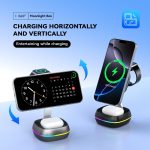
As wireless charging becomes a standard feature across smartphones, earbuds, smartwatches, and other consumer electronics, demand for reliable wireless chargers continues to grow worldwide. For brands and buyers, selecting the right wireless charger manufacturer is no longer a simple price comparison. It is a strategic decision that directly affects product quality, brand reputation, time to market, and long-term scalability.

So what should buyers really look for when choosing a wireless charger manufacturer? This article breaks down the key factors that matter most, helping procurement teams, product managers, and business owners make informed sourcing decisions.

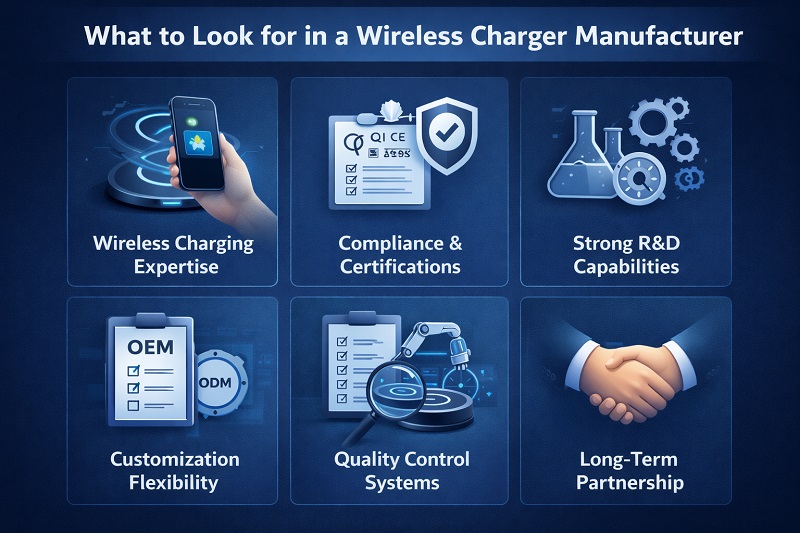
Manufacturing Experience in Wireless Charging Technology

Not all electronics manufacturers truly understand wireless charging. Buyers should prioritize manufacturers with proven experience specifically in wireless power products rather than general consumer electronics.

Wireless charging involves complex elements such as coil design, power management, thermal control, electromagnetic compatibility, and certification compliance. Manufacturers with long-term experience in this field are better equipped to optimize performance, reduce failure rates, and solve technical challenges during mass production.

An experienced manufacturer is also more likely to anticipate common issues such as overheating, unstable charging, or device incompatibility before they become costly problems.

Compliance With International Certifications and Standards

Certification is a critical consideration when sourcing wireless chargers for global markets. Buyers should ensure that the manufacturer is familiar with and capable of meeting international regulatory requirements.

Common certifications include Qi standard compliance, CE, FCC, RoHS, and other regional approvals depending on the target market. A reliable manufacturer should not only understand these requirements but also actively integrate compliance into product design and testing processes.

Manufacturers who regularly work with international clients are typically more efficient at managing certification timelines, documentation, and third-party testing, helping buyers avoid delays when launching products.

Strong R&D and Engineering Capabilities

Wireless charging technology continues to evolve, with improvements in fast charging, multi-device charging, and efficiency optimization. Buyers should look for manufacturers with in-house research and development teams rather than those relying solely on off-the-shelf solutions.

A strong R&D team can support customization, performance optimization, and new product development. This is especially important for brands seeking differentiation through design, charging speed, or form factor.

Manufacturers with engineering depth are also better partners for long-term collaboration, as they can adapt to future technology trends and changing market demands.

OEM and ODM Customization Flexibility

For many buyers, customization is a key requirement. Whether it is branding, housing design, charging configuration, or packaging, the ability to offer OEM and ODM services adds significant value.

Buyers should evaluate how flexible a manufacturer is when it comes to customization. This includes logo placement, color options, material selection, charging power output, and even internal component adjustments.

A manufacturer with mature OEM and ODM processes can help brands bring unique products to market more efficiently while maintaining consistent quality standards.

Quality Control and Production Management

Consistent quality is essential for wireless chargers, especially since charging performance and safety directly affect user trust. Buyers should assess the manufacturer’s quality control systems and production management processes.

Reliable manufacturers implement strict quality checks at every stage, from incoming material inspection to in-process testing and final product verification. Automated testing equipment, standardized procedures, and documented quality systems are strong indicators of manufacturing reliability.

In addition, stable production management ensures consistent lead times, scalable capacity, and reduced risk during peak demand periods.

Supply Chain Stability and Component Sourcing

Wireless chargers rely on multiple critical components, including power management chips, coils, PCBs, and connectors. Supply chain instability can lead to inconsistent quality or delayed shipments.

Buyers should look for manufacturers with stable supplier networks and strong sourcing capabilities. Manufacturers who maintain long-term relationships with component suppliers are better positioned to manage cost fluctuations and material shortages.

This stability is particularly important for brands planning long-term product lines or recurring orders.

Thermal Management and Safety Design Expertise

Heat control is one of the most important technical aspects of wireless charging. Poor thermal design can lead to reduced charging efficiency, shortened product lifespan, or safety risks.

Buyers should ensure that manufacturers have experience in thermal optimization, including heat dissipation design, temperature monitoring, and intelligent power regulation. Manufacturers who prioritize safety design are more likely to deliver reliable products that meet international safety standards.

This expertise is especially important for fast wireless charging and multi-device charging products.

Communication and Project Management Support

Effective communication is often overlooked but plays a crucial role in successful sourcing. Buyers should evaluate how responsive and transparent a manufacturer is during early discussions and sample development.

Clear communication, structured project management, and timely updates help prevent misunderstandings and reduce development risks. Manufacturers who provide clear timelines, technical feedback, and proactive problem-solving are easier to work with in the long run.

For international buyers, strong English communication skills and experience working across time zones are additional advantages.

Scalability and Long-Term Partnership Potential

Beyond the first order, buyers should consider whether a manufacturer can support future growth. This includes production scalability, new product development, and the ability to adapt to market changes.

Manufacturers who view themselves as long-term partners rather than short-term suppliers tend to invest more in process improvement, innovation, and customer support. This mindset aligns better with brands seeking sustainable growth rather than one-off transactions.

Choosing the right manufacturer is not just about current needs but about future opportunities.

Cost Structure and Value, Not Just Price

While price is always an important factor, buyers should avoid focusing solely on the lowest quote. Instead, evaluating overall value is more effective.

This includes product reliability, certification readiness, engineering support, quality consistency, and after-sales service. A slightly higher unit cost may result in lower total cost of ownership by reducing returns, delays, and reputational risk.

Experienced buyers understand that a reliable manufacturer often delivers better long-term value than a low-cost but unstable supplier.

Why Manufacturer Selection Matters More Than Ever

As wireless charging becomes a standard expectation across consumer devices, competition in the market continues to intensify. Brands that succeed are those that deliver consistent quality, reliable performance, and meaningful differentiation.

Selecting the right wireless charger manufacturer plays a central role in achieving these goals. The manufacturer influences not only the product itself but also development speed, compliance success, and customer satisfaction.

In a market where user experience and safety are paramount, manufacturer selection is a strategic decision rather than a procurement formality.

結論

Choosing a wireless charger manufacturer requires careful evaluation across multiple dimensions, including technical expertise, quality control, customization capability, and long-term partnership potential. Buyers who take the time to assess these factors are better positioned to build successful products and sustainable brands.

As wireless charging technology continues to evolve, working with an experienced and capable manufacturer becomes a key competitive advantage. For buyers seeking reliability, scalability, and innovation, the right manufacturing partner can make all the difference.