The automotive accessories market offers retailers many ways to attract customers, from practical vehicle accessories to products that improve the everyday driving experience. Car fragrance products belong to a particularly flexible category because they combine personal preferences, interior styling, and everyday convenience.
However, retailers selling only conventional fragrance cards or passive scent diffusers may find it difficult to distinguish their offerings from competing products. Introducing electronic fragrance devices can provide another approach to product development and help businesses reach consumers looking for more functional automotive accessories.
For importers, distributors, and private-label brands, a smart car air freshener is worth considering as part of a broader automotive fragrance strategy. Nandou Technology offers the JK-470 smart car aroma diffuser for businesses exploring this product category.
Why Expand Beyond Traditional Car Air Fresheners?
Traditional avtomobil hava təravətləndiriciləri remain familiar to consumers, but the category also includes opportunities for products with different operating mechanisms, visual designs, and user experiences.
Electronic fragrance diffusers allow brands to introduce additional product features and create a more varied assortment. Rather than competing exclusively on fragrance choice or price, retailers can offer products designed around convenience, appearance, and adjustable fragrance delivery.
Introduce a More Functional Product Category
Some customers prefer simple, low-cost fragrance products, while others are interested in electronic accessories that offer more control over their experience.
A smart fragrance diffuser can serve the latter group by combining fragrance delivery with electronic controls and an integrated design. This gives retailers another product category to consider when developing an assortment for customers who appreciate modern automotive accessories.
Create More Opportunities for Product Differentiation
In competitive retail environments, a product's appearance and user experience can influence purchasing decisions alongside its price.
Electronic car fragrance devices provide opportunities to differentiate through product form, display design, operating functions, fragrance options, and packaging. These elements can help brands establish a recognizable product identity when supported by consistent marketing and product quality.
How to Position Smart Car Fragrance Products in Your Catalog
Adding a new product category is most effective when it supports a clear commercial objective. Retailers should consider how an electronic diffuser complements their existing assortment instead of treating every new product as an isolated purchasing decision.
Build a Range Around Different Customer Preferences
A balanced automotive fragrance collection may include basic fragrance products for price-sensitive customers, decorative diffusers for shoppers who value appearance, and electronic models for customers seeking additional functionality.
This approach allows retailers to serve different preferences without relying on a single product type. The ideal assortment will depend on the target market, customer demand, retail pricing, and available shelf or listing space.
Use Product Features to Support Clear Marketing
For electronic fragrance products, marketing should explain practical benefits rather than simply listing technical specifications.
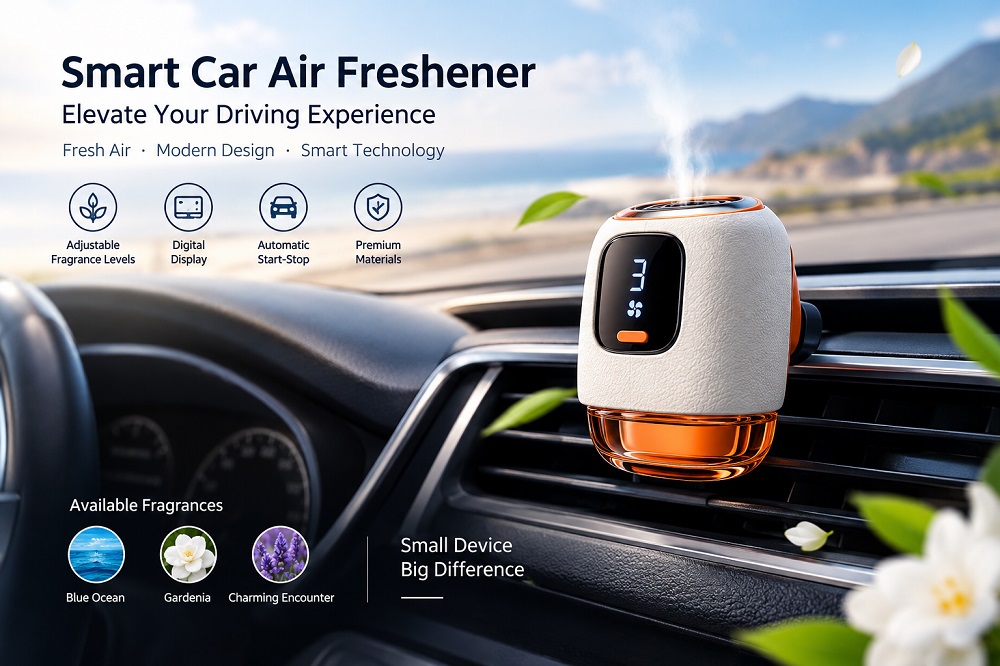
For example, adjustable fragrance settings can be presented as a way to accommodate different scent preferences. A digital display can be highlighted as part of the product's modern design, while automatic operating functions can be explained in terms of everyday convenience.
Clear descriptions and realistic product demonstrations help customers understand how an electronic diffuser differs from a conventional fragrance product.
What Retailers Should Know About the JK-470 Smart Car Aroma Diffuser
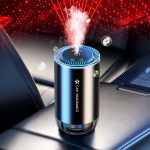
The JK-470 from Nandou Technology is designed for businesses interested in electronic car fragrance accessories. Its combination of a compact form, digital display, and adjustable fragrance settings offers a different product presentation from traditional passive air fresheners.
The model is designed for compatible vehicle air vents and has a listed fragrance capacity of 20 ml. Its exterior uses PP and PETG materials with a sheepskin-textured finish.
The product is offered with Blue Ocean Scent, Gardenia Scent, and Charming Encounter fragrance options. These choices give buyers a starting point for assessing which fragrance profiles may suit their intended customers.
Evaluate the Product Before Adding It to Your Range
Retailers should request samples and assess the diffuser's appearance, installation method, operating controls, fragrance characteristics, and packaging before making a purchasing decision.
It is also important to confirm the latest technical specifications, battery details, charging requirements, and product documentation with the supplier. Fragrance performance should be evaluated under realistic conditions because usage patterns, temperature, and ventilation can affect the customer experience.
Private Label Strategies for Car Fragrance Brands
Private labeling allows businesses to develop products under their own brand rather than relying entirely on generic retail offerings. For automotive fragrance companies, this can support a more consistent presentation across product packaging, online stores, distributor catalogs, and promotional materials.
When developing a private-label electronic car air freshener, buyers should begin by identifying the brand positioning and the features most relevant to their customers.
Align Product Presentation with Your Brand Identity
Depending on the manufacturer's capabilities, potential customization areas may include logo application, selected product colors, fragrance choices, labels, and packaging artwork.
Not every customization option is available for every model. Buyers should confirm technical feasibility, minimum order quantities, development costs, and production lead times before approving a project.
Develop Packaging for Your Sales Channel
Packaging requirements can differ between physical retail, e-commerce, wholesale distribution, and promotional gifting.
Online retailers may prioritize clear product photography and packaging that protects the device during shipping. Distributors may focus on carton dimensions, case quantities, and efficient warehouse handling. Gift suppliers may place greater emphasis on presentation and branding.
Discussing the intended sales channel with the manufacturer helps establish suitable packaging specifications before production begins.
Wholesale Planning for International Buyers
International sourcing involves more than selecting a product and negotiating a unit price. Buyers need to evaluate the commercial requirements of importing, distributing, and supporting the product in their destination market.
Request a Detailed Quotation
A useful quotation should identify the product model, order quantity, included accessories, packaging configuration, available customization, and applicable production lead time.
Buyers should also clarify payment terms, sample costs, shipping arrangements, inspection procedures, and the handling of defective products. Confirming these details early helps make supplier comparisons more meaningful.
Check Market Requirements Before Ordering
Electronic car fragrance devices may be subject to product safety, battery transportation, labeling, and other requirements depending on the destination market and product configuration.
Importers should identify the applicable requirements for their countries and request relevant supporting documentation from the manufacturer. Fragrance formulations and associated labeling may also require separate review.
Any compliance claims should be supported by documentation appropriate to the specific product and market.
How to Build Long-Term Value from a New Fragrance Product
A successful product launch requires more than making an item available for sale. Retailers should collect customer feedback, monitor purchasing patterns, and assess which product features contribute to repeat demand.
For electronic car fragrance devices, useful feedback may include ease of installation, fragrance preferences, charging convenience, perceived product quality, and packaging satisfaction.
These observations can guide future purchasing decisions and help brands decide whether to expand fragrance selections, introduce complementary models, or refine their product presentation.
Maintaining communication with the manufacturer is also valuable when planning repeat orders or considering product improvements. Clear records of approved specifications, packaging artwork, and quality expectations can support greater consistency across orders.
Source Smart Car Fragrance Products from Nandou Technology
For automotive accessory retailers, adding an electronic fragrance diffuser can create another way to differentiate a car fragrance collection. The key is to select a product that fits the target market, offers a clear customer benefit, and supports a commercially practical sourcing plan.
Nandou Technology's JK-470 smart car aroma diffuser is an option for importers, wholesalers, and private-label businesses evaluating this category. Buyers can assess the model's design, fragrance choices, and operating features before deciding whether it fits their product strategy.
Contact Nandou Technology to request updated product specifications, sample availability, wholesale pricing, minimum order quantities, and information about OEM/ODM customization options.
Bəyənə bilərsən
 Toplu Sifarişlər üçün Çində Ən Yaxşı Simsiz Şarj İstehsalçıları
- Simsiz şarj - Telefonunuzu necə doldurmaq olar
- OEM və ODM Simsiz Şarj Cihazları Brendlərin Daha Sürətli Böyüməsinə Necə Kömək Edə Bilər?
- Simsiz Şarj Smartfon Güc Həllərinin Gələcəyidirmi?
- Xüsusi Avtomobil Hava Təravətləndiriciləri: Ağıllı Aromaterapiya ilə Avtomobildə Təcrübəni Artırın
- USB çox portlu 15W simsiz şarj cihazı+3USB interfeysi
- ABŞ standartı 3 deşikli rozetka+2USB+1TYPE-C yuvası+Simsiz şarj
- Telefon, Qulaqcıq və Saat üçün Ən Yaxşı 3-ü 1-də Simsiz Şarj Stansiyası – Sürətli Masaüstü Şarj Həlli
- Ağıllı Elektrikli Avtomobil Hava Təravətləndiricisi | Lüks Ətir Diffuzoru JK-051
- Ev istifadəsi üçün kabel ilə ən yaxşı USB güc zolağı hansıdır?