Introduction
Wireless charging has rapidly evolved from a nice-to-have accessory to a mainstream requirement for mobile devices, wearables, and even laptops. As a supplier or manufacturer, fast wireless charging presents a significant business opportunity—but also stiff competition. Success in today’s market requires more than just slapping a coil and controller into a case. You need a deep understanding of technology, standards, safety, regulatory compliance, customer expectations, product differentiation, and supply chain realities.
This guide explores what suppliers need to consider when designing, sourcing, certifying, and marketing fast wireless chargers. Whether you are a seasoned ODM/OEM or new to wireless power products, this article gives you a comprehensive roadmap for better product decisions.
1. Why Fast Wireless Charging Matters
Wireless charging is convenient, cable-free, and increasingly expected in premium devices. But consumers want speed as well as convenience.
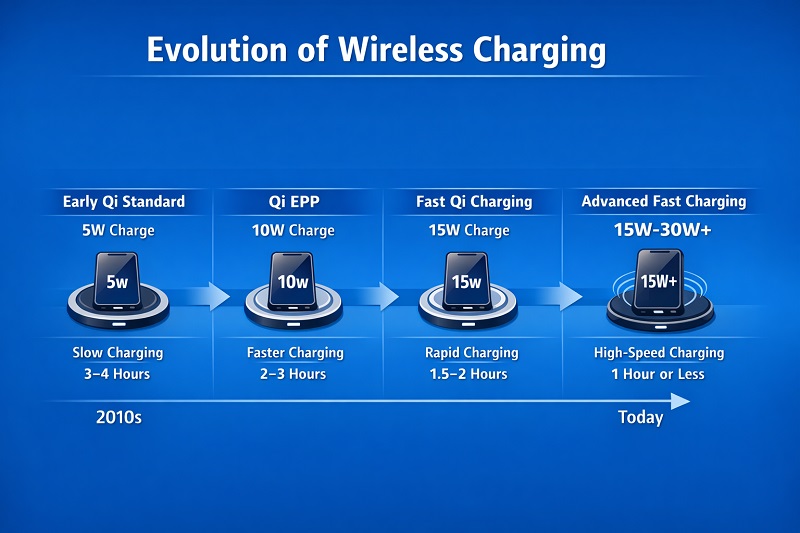
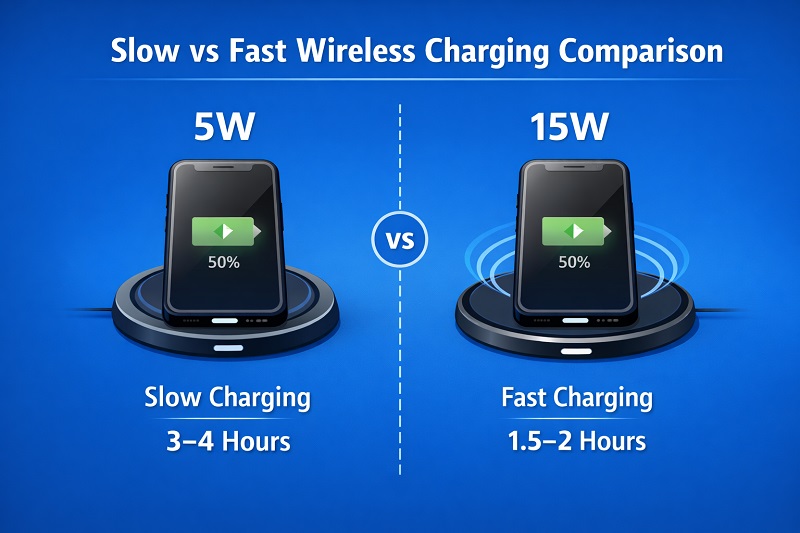
Traditional Qi wireless charging often delivered slow power (5W–7.5W), which could take hours to fully charge a typical smartphone. Fast wireless charging, by contrast, targets 15W–30W or more, significantly narrowing the gap with wired charging.
As devices support higher power levels and users expect less downtime, fast wireless charging becomes more than a novelty—it becomes a competitive differentiator.
2. Understanding Wireless Charging Standards
Before choosing components or designing products, suppliers must understand the main standards:
a. Qi (by Wireless Power Consortium)
The dominant global standard. Most smartphones (Android and iPhone) support Qi, with many supporting higher wattage versions for fast charging.
Key Qi versions:
- Baseline Qi for basic 5W charging
- Extended Power Profile (EPP) for fast wireless charging (up to ~15W–30W)
Understanding and supporting the correct Qi profiles is essential for compatibility and performance.
b. Proprietary Fast Charging Protocols
Some manufacturers (e.g., Samsung, Google) implement custom enhancements over Qi to achieve faster power delivery on their devices.
As a supplier, you can choose to support broad Qi EPP only or include additional protocol support for devices that benefit from proprietary fast wireless charging.
3. Key Components of Fast Wireless Chargers
Building a fast wireless charger requires knowing the parts that make speed possible:
a. Transmitter Coil Design
The heart of any wireless charger. Coil size, number of loops, and configuration (single vs. multi-coil) influence:
- Charging efficiency
- Generowanie ciepła
- Coverage area for alignment
Multicoil designs offer greater alignment tolerance—important for fast, reliable charging.
b. Power Electronics
Fast wireless chargers demand power electronics that can safely deliver higher wattages.
Key elements include:
- Układy scalone do zarządzania energią (PMIC)
- High-efficiency converters
- Thermal monitoring and control
Suppliers must select components that maintain efficiency and safety at 15W+ power levels.
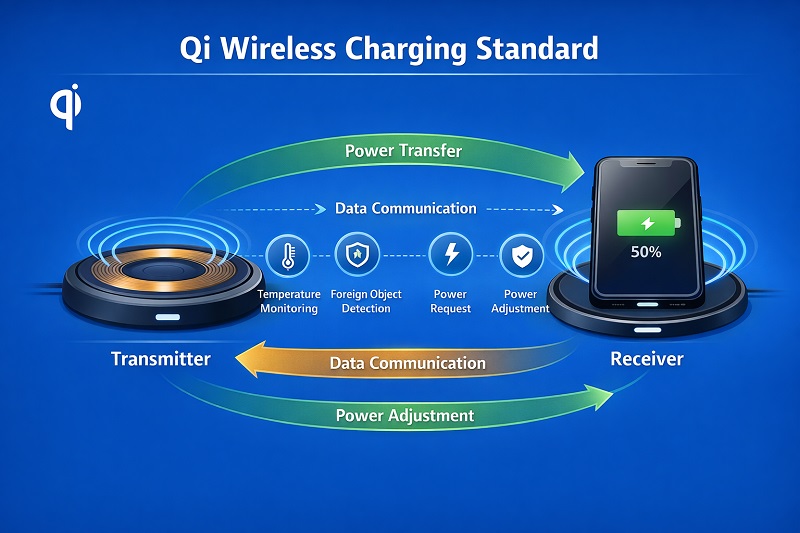
c. Communication & Control Firmware
Wireless power is more than sending energy—devices and chargers must communicate:
- Device requests power level
- Charger adjusts output
- Thermal and foreign object detection (FOD) occurs
Robust firmware and QC ensure compatibility across phone brands and models.
d. Mechanical Design & Materials
Case materials affect wireless power:
- Metal interferes with charging
- Thick plastic or metal finishes reduce efficiency
Good design balances aesthetics with functionality.
4. Performance Criteria Suppliers Must Prioritize
When evaluating or designing fast wireless chargers, consider these key performance indicators:
a. Output Power & Efficiency
- Target minimum 15W for "fast" classification
- Higher power (>20W) offers better competitiveness
- Look at efficiency (%): higher means less wasted energy and heat
b. Alignment Tolerance
Consumers often place phones imperfectly. Chargers that require precise alignment can frustrate users.
Multicoil arrays or larger charging surfaces improve tolerance and user experience.
c. Thermal Management
Wireless charging inherently generates heat. Excessive heat:
- Slows charging (device throttles)
- Reduces battery life over time
- Can present safety concerns
Thermal design—internal heat sinks, vents, quality components, firmware limits—matters for safe fast charging.
d. Interoperability
Test across a wide range of devices:
- iPhone models (with Qi EPP support)
- Android models with proprietary enhancements
- Wireless Earbuds and wearables
Supporting broad compatibility increases market reach.
5. Safety & Compliance
Fast wireless chargers must comply with electrical and wireless safety standards.
a. Regulatory Compliance
Depending on market:
- FCC (US)
- CE (Unia Europejska)
- RCM (Australia/New Zealand)
- BIS (India)
Ensure products carry necessary markings and approvals.
b. Wireless Power Certification
Qi certification ensures compatibility and safety.
Many retailers and brands insist on Qi-certified products.
c. Safety Features
Implement and test:
- Over-voltage/over-current protection
- Over-temperature shutdown
- Wykrywanie obiektów obcych (FOD)
- Zabezpieczenie przed zwarciem
Document test results thoroughly—buyers and distributors often require safety documentation.
6. Differentiators That Buyers Care About
If all fast wireless chargers look similar at first glance, what features help a supplier stand out?
a. Design and Aesthetics
Minimalist, premium finishes, brandable surfaces, and color options can make products more attractive to consumers and retailers.
b. User Convenience Features
- LED indicators to show charging status
- Non-slip pads for secure placement
- Foldable stands for desktop use
- Multiple device support (e.g., duo chargers for phone + earbuds)
c. Intelligent Charging
Adaptive algorithms that:
- Detect device type
- Adjust wattage intelligently
- Reduce power when nearing full charge
These features improve battery health and user satisfaction.
d. Eco & Regulatory Trends
- Use of recyclable materials
- Energy efficiency compliance (no standby power waste)
Being able to claim an eco-friendly product can help in many markets.
7. Sourcing & Manufacturing Considerations
For suppliers planning production or partnerships, several operational factors are vital:
a. Component Quality and Supply Chain Stability
High-power wireless chargers rely on:
- Quality inductive coils
- Reliable PMICs
- Czujniki temperatury
Long lead times or volatile pricing of components can erode margins—develop supply agreements early.
b. Manufacturing Tolerances and Testing
Wireless product performance is sensitive to assembly precision:
- Coil positioning
- Shielding
- Thermal pathways
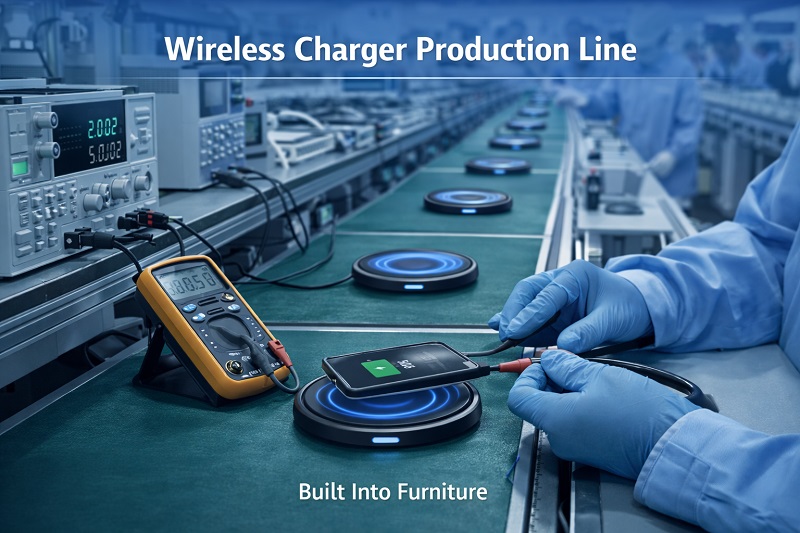
Invest in proper in-line testing (power, efficiency, heat under load).
c. Scalability
Forecast demand, then plan capacity:
- Can your OEM partner scale?
- Do they use automated assembly?
- How is quality control handled at scale?
Scalability influences lead times and cost.
d. Packaging and Manuals
Fast wireless chargers often ship retail-ready. Ensure:
- Clear specs
- Safety warnings
- Brand identity
- Regulatory marks
Good packaging can improve retail performance.
8. Pricing Strategy
Pricing for fast wireless charging products must balance cost, margin, and competitor pricing.
a. Competitive Benchmarking
Study:
- Entry-level Qi chargers
- Mid-tier fast chargers
- Premium branded units
Match your product specs to appropriate pricing tiers.
b. Feature Pricing
Certain features—multi-device charging, stand design, enhanced thermal systems—justify higher prices.
c. Cost of Goods Sold (COGS)
Account for:
- Components
- Testing and certification
- Packaging
- Wysyłka
- Warranty support
Margins in electronics can be thin—accurate cost modeling is essential.
9. Marketing Positioning & Go-to-Market Strategies
As a supplier, how you position and sell your product affects success.
a. Defining Target Customers
Your buyer might be:
- Retail consumers (via eCommerce)
- Tech accessory retailers
- White-label brand partners
- Corporate clients (bulk orders for offices/hotels)
Each buyer has different priorities.
b. Technical Content
Suppliers should provide:
- Datasheets
- Test reports
- Compliance certificates
- Installation and safety guides
These build trust with distributors and end users.
c. Branding vs. Private Label
Decide whether you:
- Sell under your own brand with marketing support
- Provide white-label units for other brands
Each has pros and cons in control, pricing, and marketing investment.
10. Warranty, Support & After-Sales Service
Wireless chargers are expected to be reliable. Warranty and easy support help close sales.
a. Warranty Terms
A competitive 1–2 year warranty signals confidence in your product.
b. Customer Support
Provide:
- Easy-to-find FAQs
- Troubleshooting guides
- Warranty claim process
Retailers often require responsive support.
c. Returns Handling
Plan your RMA process. Fast replacement and repair can keep seller ratings high.
11. Future Trends & Opportunities
Staying ahead matters. Suppliers should watch trends such as:
a. Higher Power Levels
The push to 30W+ wireless charging is accelerating.
b. Expanded Device Support
Laptops and tablets with wireless power capabilities could open new segments.
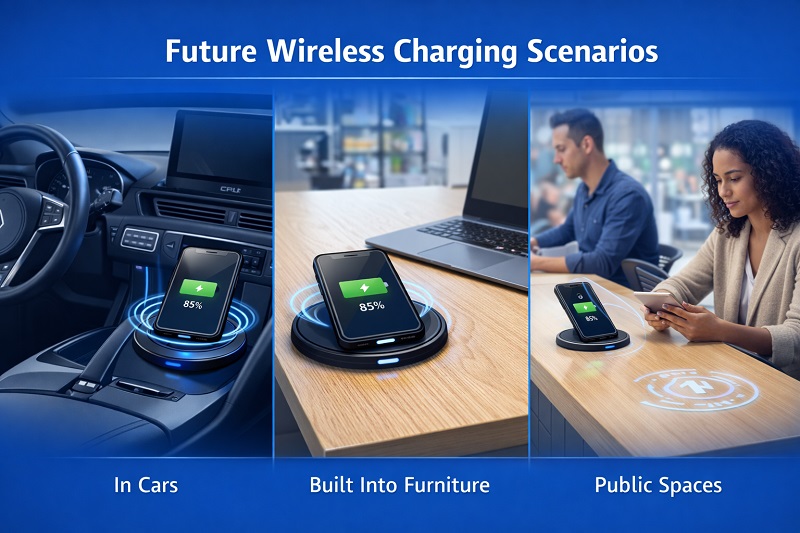
c. Integration with Furniture & Vehicles
Embedded chargers in desks, cars, and public spaces expand use cases.
d. Smart Features
Integration with:
- Bluetooth
- App controls
- Device optimization
- Adds value and differentiation.
Wniosek
Fast wireless charging isn’t a simple specification—it’s a product category that combines protocol mastery, hardware selection, safety compliance, performance optimization, and user experience design.
For suppliers, success comes from:
- Understanding standards (especially Qi)
- Designing efficient and safe products
- Choosing quality components
- Complying with regulatory bodies
- Delivering features customers want
- Supporting buyers with documentation, warranty, and service
By carefully navigating technology and market expectations, suppliers can deliver fast wireless chargers that stand out, build trust, and generate sustainable revenue.
Może Ci się spodobać
 Inteligentny głośnik 3 w 1 z ładowaniem bezprzewodowym
- Odświeżacz powietrza do samochodu
- Inteligentna, szybka ładowarka samochodowa bezprzewodowa o mocy 15 W: niezawodna modernizacja dla nowoczesnych kierowców
- Inteligentny odświeżacz powietrza do samochodu
- Jaka jest najmocniejsza ładowarka bezprzewodowa dostępna na rynku?
- Jak wybrać najlepszą ładowarkę bezprzewodową do domu lub biura?
- Przenośny odświeżacz powietrza do samochodu
- Pregnant-Safe Car Air Freshener for Infants | OEM Car Vent Aroma Diffuser Supplier
- Nowa generacja magnetycznej ładowarki bezprzewodowej Qi2.2 3 w 1 zapewnia szybkie, wydajne i chłodne ładowanie
- Jak działa bezprzewodowa ładowarka samochodowa do telefonu podczas jazdy