As a manufacturer specializing in Qi2 wireless charging technology, we have been directly involved in the development, testing, and mass production of next-generation magnetic wireless chargers. With the rapid global adoption of magnetic charging—especially driven by Apple’s MagSafe—many overseas buyers frequently ask us:
“What is the difference between Qi2 and MagSafe?”
“Are they compatible?”
“Which standard should we choose for future product lines?”
Because both technologies use magnetic alignment and promise fast, stable wireless power delivery, it is easy to assume that Qi2 and MagSafe are identical. However, from an engineering, certification, and commercial perspective, they are fundamentally different standards with different implications for buyers, distributors, and brands.
In this article, we explain these differences clearly based on our technical expertise and practical manufacturing experience.
1. Origins of the Standards: Open vs. Proprietary
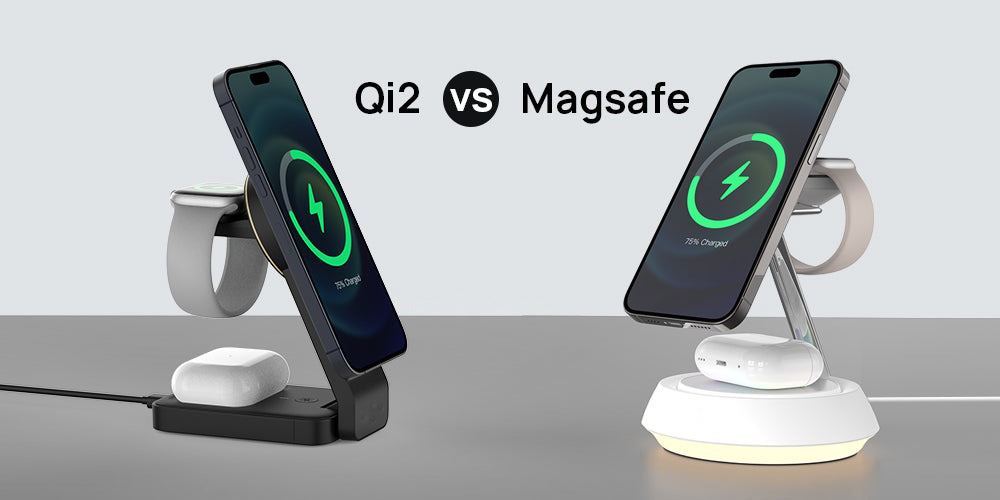
MagSafe — Apple’s Proprietary Magnetic Charging Standard
Apple introduced MagSafe with the iPhone 12 series, integrating:
- A built-in magnetic ring
- A specialized charging protocol
- Authentication chips
- A proprietary communication system
- Up to 15W wireless fast charging
The MagSafe ecosystem is fully controlled by Apple. Only officially licensed manufacturers with Apple’s Made for iPhone (MFi) authorization can produce true 15W MagSafe chargers.
Others can make “MagSafe-style” magnetic chargers, but they are not certified and only deliver up to 7.5W for iPhones.
Qi2 — The New Global Standard from the Wireless Power Consortium (WPC)
Qi2 is developed by the Wireless Power Consortium (WPC) and represents the next phase of open, global wireless charging development.
Key differences:
- Qi2 is open and industry-wide, not proprietary
- It is based on Apple’s MagSafe magnetic technology (through the Magnetic Power Profile)
- It includes a new Enhanced Power Profile for better efficiency
- It uses standardized magnet strength, coil alignment, and mechanical specifications
- It supports up to 15W fast charging for iPhones, and eventually for Android devices as well
As a manufacturer, we consider Qi2 a milestone:
It brings MagSafe-level performance to the entire industry—without Apple’s licensing limitations.
2. Magnetic Alignment — Both Magnetic, But Not the Same System
Both Qi2 and MagSafe rely on magnetic rings to improve coil alignment. However, their implementations differ.
MagSafe’s Magnetic System
Uses Apple’s proprietary magnet configuration
Ensures precise alignment with iPhones
Integrates NFC for accessory authentication
Supports secure magnetic mounts for chargers, cases, wallets, and stands
Qi2’s Magnetic System
Uses a standardized magnet ring specification defined by WPC
Compatible with all Qi2-certified devices
Provides the same snap-to-spot alignment benefits
Ensures universal magnetic compatibility across manufacturers
From a manufacturing perspective, Qi2 brings consistency and cross-brand interoperability, while MagSafe only guarantees performance within Apple's ecosystem.
3. Charging Speed and Efficiency
MagSafe Charging
- Up to 15W for iPhones
- Requires official Apple-licensed chargers
- Non-certified magnetic chargers max out at 7.5W
Qi2 Charging
- Up to 15W for iPhones
- Also supports fast charging for future Android Qi2 devices
- More efficient coil alignment compared to old Qi
- Lower energy loss and heat generation
In other words:
👉 Qi2 equals MagSafe in performance for iPhones—but in an open-standard format.
For buyers, this means higher flexibility and lower product cost.
4. Compatibility Differences
MagSafe Compatibility
Works best with iPhone 12–iPhone 16 (and newer)
Full 15W only possible with certified MagSafe chargers
Apple Watch uses its own magnetic standard (not MagSafe or Qi2)
Qi2 Compatibility
Backward compatible with Qi wireless charging
Offers magnetic alignment for Qi2-enabled devices
Supports 15W on all Qi2-certified iPhones
Expected to become the unified magnetic charging standard for Android manufacturers
Qi2 is already being integrated into upcoming smartphones from multiple major brands, meaning the ecosystem will expand well beyond Apple.
5. Certification and Licensing Requirements
MagSafe
Requires strict Apple MFi certification
Uses proprietary components
Higher BOM (bill of materials) cost
More expensive for manufacturers and buyers
Qi2
Requires WPC Qi2 certification
Uses standardized hardware available to all manufacturers
More affordable and scalable
Ensures cross-brand compatibility
From our manufacturing standpoint, Qi2 provides a healthier competitive environment and reduces dependency on proprietary supply chains.
6. User Experience — Both Are Magnetic, But Qi2 Is More Universal
Both standards offer:
- Improved alignment
- Faster, more stable power transfer
- Secure phone attachment
- Better thermal performance
However, the user experience differs:
MagSafe Strengths
- Seamless integration with iPhone
- Strong magnetic stability
- Wide variety of Apple accessories
- Premium ecosystem feel
Qi2 Strengths
- Works across brands
- Same magnetic convenience as MagSafe
- Future-proof as more Android models adopt Qi2
- Lower cost for consumers and OEM/ODM buyers
As a manufacturer, we see Qi2 becoming the global standard for magnetic wireless charging, especially in:
- Hotels
- Automobiles
- Travel chargers
- Multi-device stations
- Desktop charging stands
Because its universal compatibility makes deployment easier and more cost-effective.
7. Cost, Production, and Market Strategy
MagSafe Production Cost
- High due to licensing and special components
- Restricted supplier ecosystem
- Best suited for premium Apple-focused accessories
Qi2 Production Cost
- Lower cost, more supply chain flexibility
- Faster time to market
- Ideal for both mass-market and high-end products
- More appealing for distributors and retailers seeking volume
For buyers, Qi2 provides more competitive pricing while still delivering top-tier performance.
8. Which Is Better for Your Market? Our Recommendation
Choose MagSafe if:
- You are targeting premium Apple-only customers
- You need guaranteed Apple ecosystem integration
- Your brand focuses on top-tier certified accessories
Choose Qi2 if:
- You want magnetic charging compatible with both iPhone and future Android devices
- You want lower production and retail pricing
- You want an open standard with long-term market potential
- You need high-volume OEM/ODM production
From our perspective as a Qi2 manufacturer:
Qi2 is the most promising magnetic charging standard for global markets over the next five years.
Conclusion
Qi2 and MagSafe both offer magnetic alignment and fast wireless charging, but they represent two different philosophies:
MagSafe → Proprietary, Apple-exclusive, premium
Qi2 → Open standard, universal compatibility, future-proof
For manufacturers, distributors, and brands seeking scalable, cross-platform, high-performance solutions, Qi2 delivers the benefits of MagSafe without the limitations of a closed ecosystem.
As a manufacturer of Qi2 wireless chargers, we are committed to providing reliable, certified, and customizable Qi2 charging solutions for global partners. If you need product recommendations, datasheets, certifications, or OEM/ODM services, we are ready to support your project with our full engineering and production capabilities.
You May Like
 USB Aroma Oil Diffuser
- What is the most powerful wireless charger available?
- 2 in 1 qi2 car magnetic wireless charger with telescopic cable
- 3-in-1 15W Foldable Desktop Holder with Wireless Magnetic Charger Stand
- Experience the Future of Convenience — Your One-Stop Wireless Phone Charging Stand Solution
- Can Wireless Chargers Damage the Battery Life?
- 3-in-1 Smart Speaker with Wireless Charging
- Wireless Charger Manufacturer in China | OEM & Wholesale
- Hot-selling portable smart car perfume long-lasting and natural scent diffuser
- 15W Automatic Wireless Car Charger Mount – Fast Charging, Touch-Sensing & Infrared Smart Clamp